

The digital world is built on the connections we make with others. This section explores how to communicate respectfully, protect one another online, and contribute to safe, positive digital spaces.
Looking for more? You’ll find practical resources throughout the Cyber Awareness Month website, including strengthening your own cybersecurity habits, supporting healthy technology use, and understanding how to use AI responsibly.
Technology helps people connect, learn, play, and share ideas.
Many young people use social media, online games, group chats, and other digital spaces every day.
It is important to treat others with kindness and respect online. Comments, photos, messages, and posts can be copied, shared, or saved, even after they are deleted. What we do online can have real effects on friendships, feelings, and reputations.
Being a good digital citizen means using technology responsibly. It means showing empathy, respecting others, taking responsibility for online actions, and helping create digital spaces where everyone feels safe and included.
Explore the Resources
The videos, infographics, and links on this page will help you learn about:
- Digital citizenship
- Respectful online communication
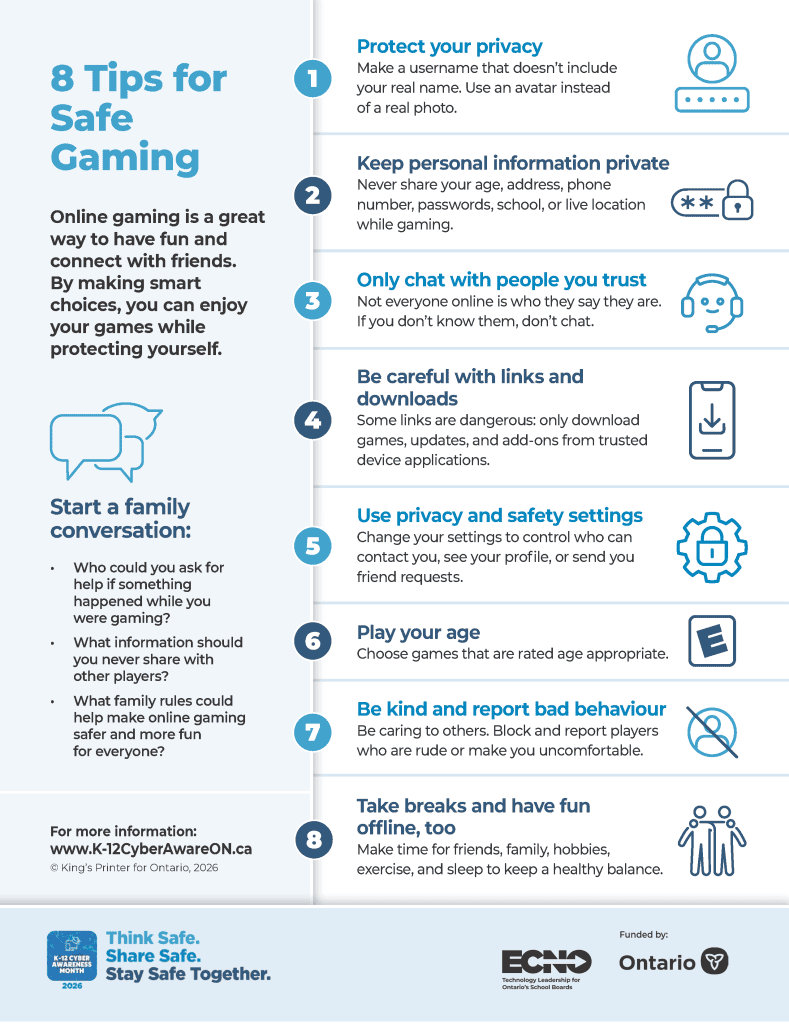
- Social media and gaming awareness
- Online relationships and boundaries
- Cyberbullying prevention
- Supporting others online
Helpful Videos
Helpful Infographics
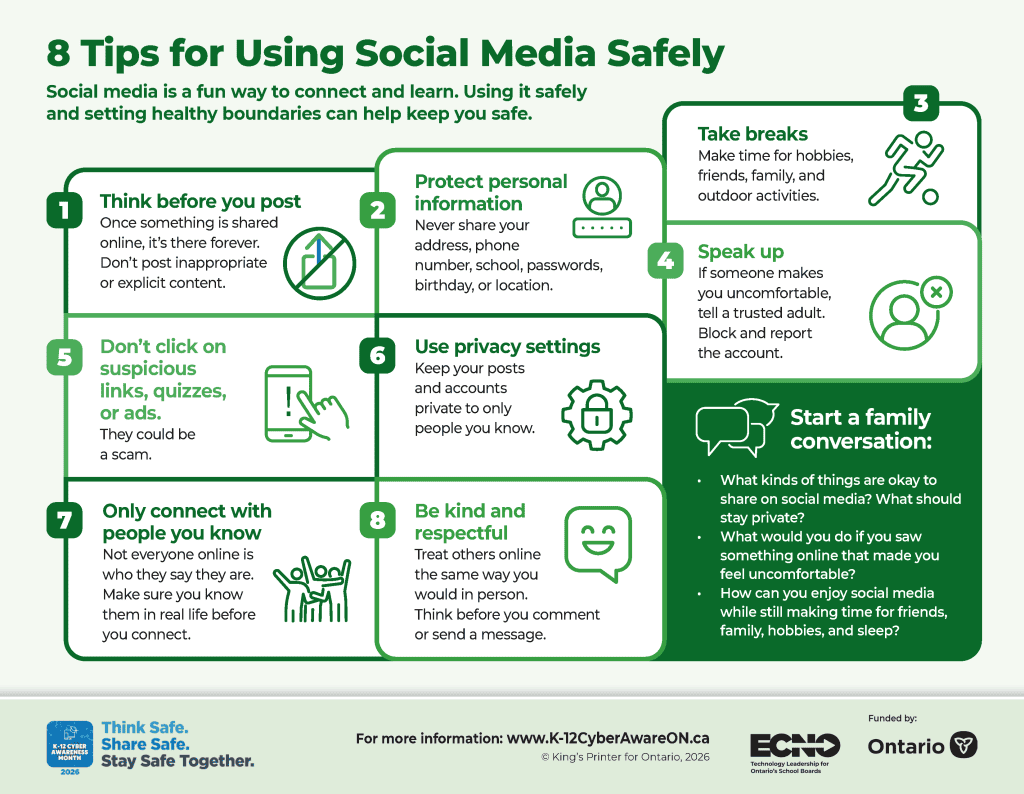
Think Before You Post
Likes Aren’t Everything
Likes, followers, and views can feel important, but they should not define someone’s worth. Spending too much time comparing ourselves to others online can affect confidence, self-esteem, and well-being.
Protect Your Privacy
Never share passwords, personal information, or private photos online. Once something is shared, it can be difficult to remove or undo.
Protect Your Future
Online posts can exist forever. Before posting, think about how the content could affect potential friendships, opportunities (school and jobs), or relationships. If you see or experience cyberbullying, tell a trusted adult right away.
Know Who You’re Talking to
Not everyone online is who they claim to be. Be careful when chatting, gaming, or connecting with new people online, and avoid sharing personal information with strangers.
Common Online Risks
- Cyberbullying, harassment, exclusion, and peer pressure
- Sharing harmful, hurtful, or inappropriate content
- Misunderstandings caused by messages and online communication
- Damage to friendships, relationships, and reputations
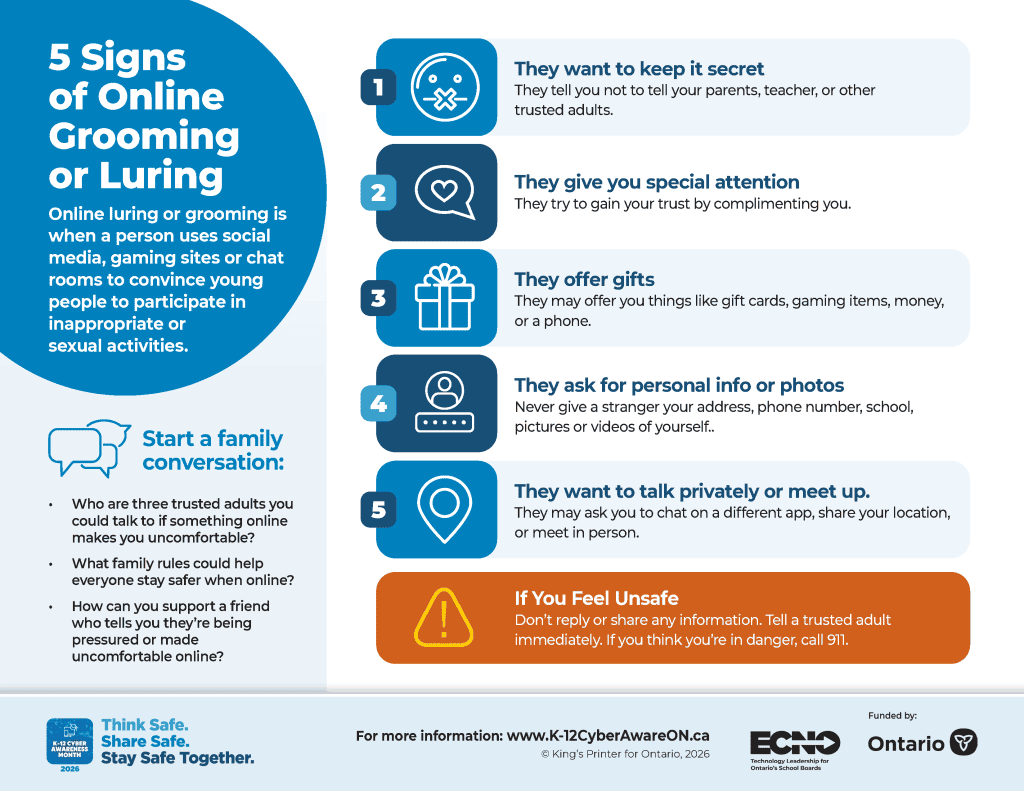
- Online grooming and luring
- Misinformation and misleading AI-generated content
Conversation Starters for Families
- How do our online actions affect other people?
- What are the warning signs of inappropriate or unsafe online behaviour?
- What should someone do if they witness or experience cyberbullying?
- What might an unhealthy online relationship look like?
- What responsibilities come with being part of an online community?
- Which trusted adult can help when an online interaction doesn’t feel right?
Creating safer digital communities starts with everyday choices. When people communicate respectfully, protect one another, and think before they post, online spaces become safer, kinder, and more welcoming for everyone.
Helpful Links
- Cybertip.ca Online Harms Resources
- Public Safety Canada – Support Resources for Cyberbullying
- Government of Canada: Report a Cyber Incident
- Find a school board or school authority | ontario.ca
Explore the Other Themes

Build confidence, good judgment, and digital habits that last a lifetime.

Manage challenges like screen time and digital wellbeing.

Learn how to use AI safely and responsibly.