

AI is becoming part of how we learn, create, and solve problems. This section explores how to use AI thoughtfully, think critically about the information it provides, and make informed decisions when using AI tools.
Looking for more? You’ll find practical resources throughout the Cyber Awareness Month website, including strengthening your own cybersecurity habits, supporting healthy technology use, and creating positive online interactions.
Artificial Intelligence (AI) is becoming part of everyday life.
AI powers search engines, chatbots, creative tools, social media, and many of the apps and learning platforms used at school and at home. It can help people learn, create, solve problems, and be more productive and it can be a useful tool when used responsibly.
At the same time, it is important to understand what AI can and cannot do, and what it should and should not be used for.
AI does not think, feel, or understand the world the way people do. It creates responses by finding patterns in large amounts of information that is available on the internet. It does not always verify that the information is correct. Because of this, AI can make mistakes, leave out important information, or give answers that are unfair or one-sided.
Being AI literate means learning how to use AI safely, responsibly, and thoughtfully. It means asking questions, checking information, protecting privacy, and remembering that AI should support learning and creativity; not replace human thinking, relationships, or decision-making.
86% of children and teens aged 9–17 use or interact with AI.
85% of AI users use it for schoolwork or homework.
57% have used AI to get information or advice about their health or body.
44% of young people say a parent or guardian has not talked to them about using AI safely.
17% of young people who use AI chatbots say an AI has shown them something they felt was inappropriate for their age. Of those, more than half (53%) did not tell a trusted adult.
Only 35% correctly know that AI cannot tell the difference between what is true and what is
false.
*AI Use by Tweens and Teens” Common Sense Media, 2026
Explore the Resources
The videos, infographics, and links on this page will help you learn about:
- What AI is and how it works
- Using AI safely and responsibly
- Spotting AI-generated content and misinformation
- Protecting privacy when using AI tools
- Verifying information from multiple sources
- Recognizing bias and errors in AI responses
- Using AI to support learning and creativity
Helpful Videos
Helpful Infographics
Use AI with Care and Purpose
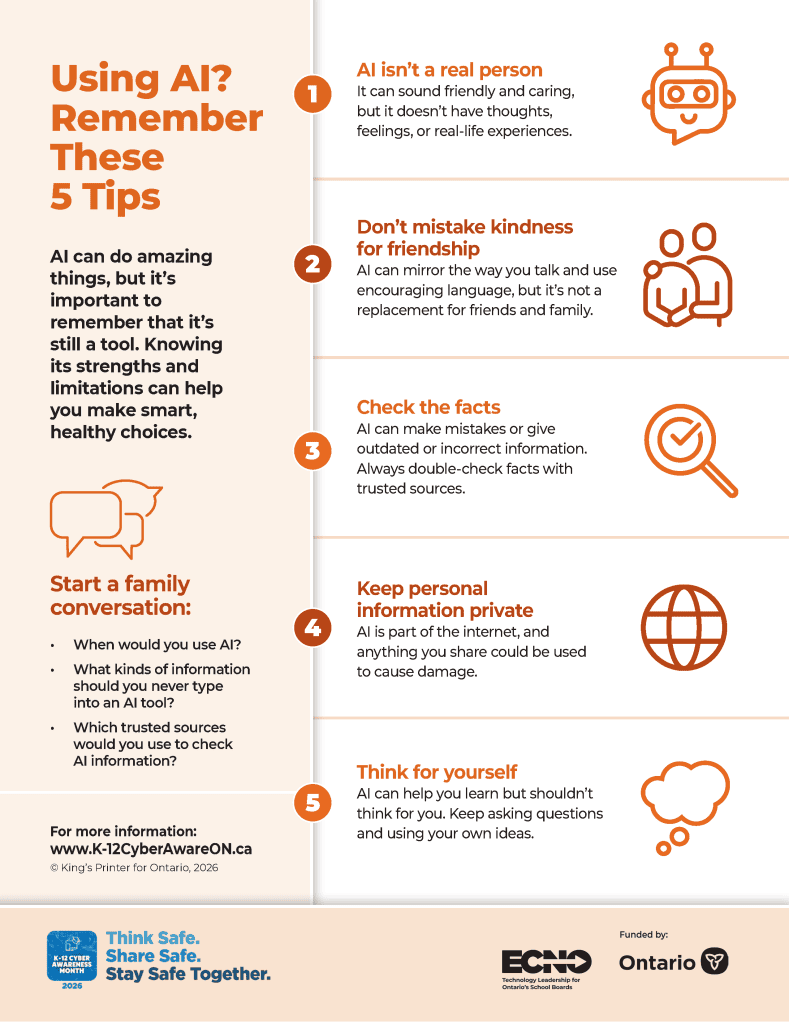
AI is a Machine, Not a Friend
Some AI tools are designed to sound friendly, caring, or understanding. This can make them seem human, but they are computer programs, not real people.
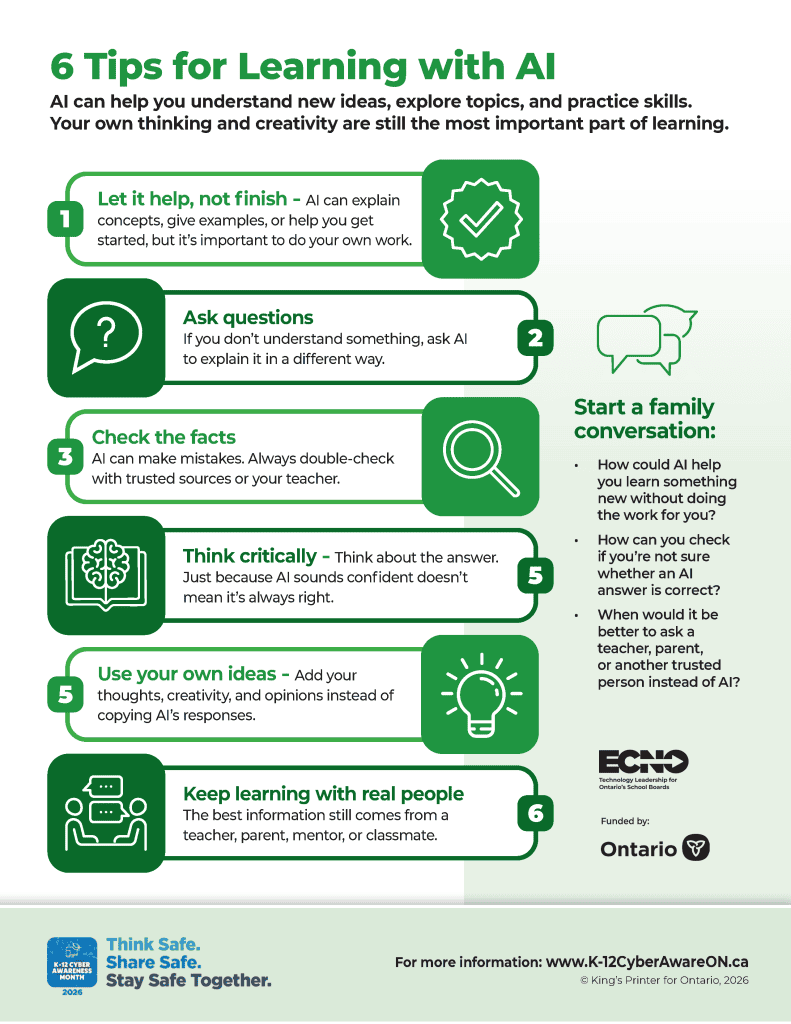
Use AI to Learn, Not Think for You
AI can be a helpful tool for brainstorming ideas, exploring topics, and supporting learning. It works best when it helps people build their own knowledge, skills, creativity, and critical thinking. (Critical thinking is the ability to carefully think about information, ask good questions, and make decisions based on facts and evidence.)
Check Before You Trust
AI is not there to provide the final answers, just point you in the right direction. It can sound confident even when it is wrong. Always double-check important information using trusted sources, especially before sharing it or acting on it.
Protect Your Privacy
Never share personal, private, or sensitive information with AI tools. Information entered into online systems may be stored, processed, or used in ways that are not always obvious. This can result in fraud, identity theft, or other harmful activity.
Real Support Comes from Real People
AI can answer questions and provide suggestions, but it cannot truly understand emotions or personal experiences. When facing personal, emotional, health, or safety concerns, turn to trusted people such as parents, caregivers, teachers, counsellors, friends, or other supportive adults.
Common Online Risks
- Trusting AI-generated information without verifying it
- Sharing personal information with AI tools
- Difficulty recognizing AI-generated content or manipulated media, misinformation and deepfakes
- Overreliance on AI for learning, problem-solving, or creative work
- Plagiarism and misuse of AI tools
- Mistaking AI for a trusted person because it sounds friendly or supportive
- Allowing AI to replace independent thinking and decision-making
Conversation Starters for Families
- What are some ways AI is used every day?
- How can people tell if information from AI is accurate?
- What personal information should never be entered into an AI tool?
- How can AI support learning without doing the work for someone?
- How can information be verified before it is shared or acted upon?
- Why might an AI chatbot seem human even though it is not?
- When is it better to ask a trusted person for help instead of using AI?
AI is not something to fear, but it is something to understand. By asking questions, checking information, protecting privacy, and staying connected to trusted people, everyone can use AI safely, responsibly, and confidently.
Helpful Links
- Cybertip.ca Online Harms Resources
- Public Safety Canada – Support Resources for Cyberbullying
- Government of Canada: Report a Cyber Incident
- Find a school board or school authority | ontario.ca
Explore the Other Themes

Build confidence, good judgment, and digital habits that last a lifetime.

Create digital spaces where everyone feels safe and included.

Manage challenges like screen time and digital wellbeing.